
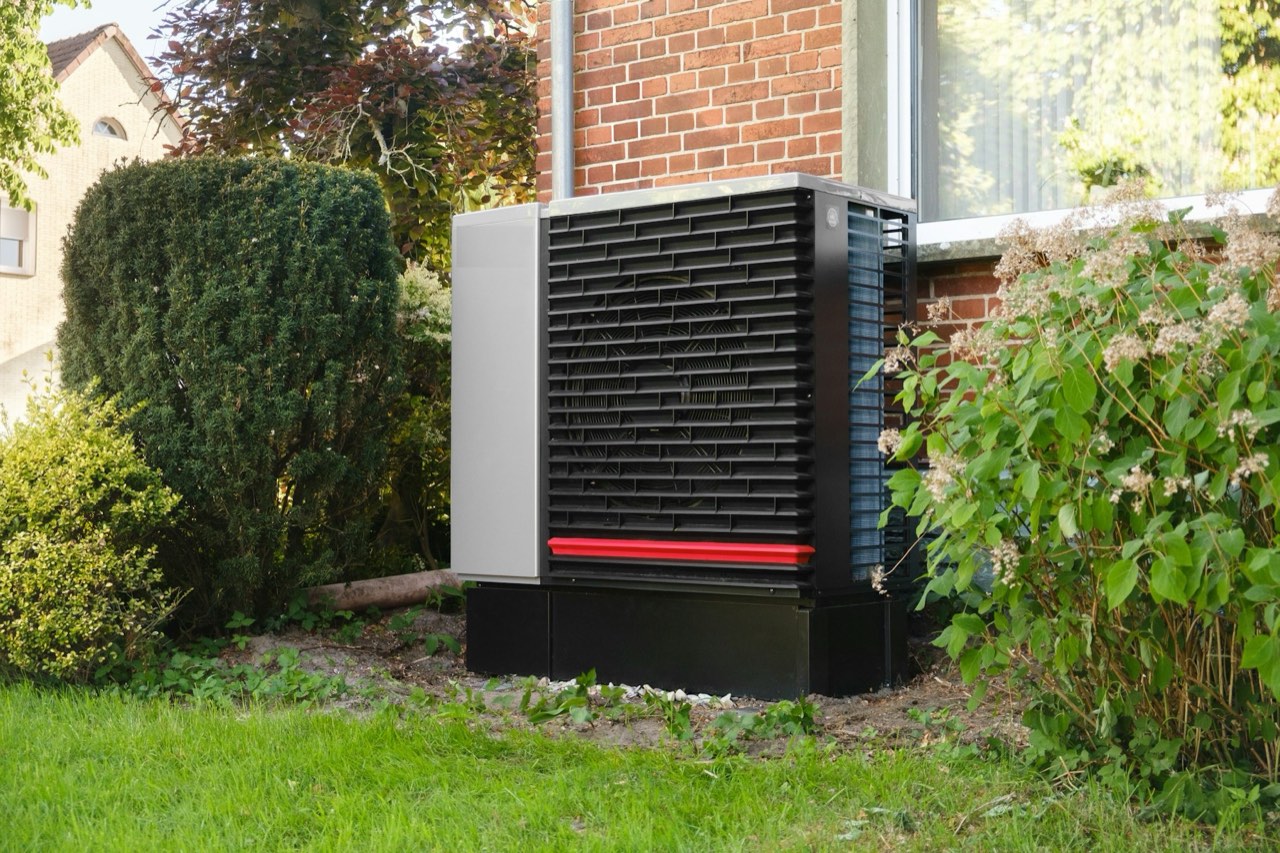
Yes, heat pumps can work in old houses, including stone, solid wall and period homes. The catch is that an old house leaves less room for a lazy design. The heat pump has to be sized from a proper heat loss survey, the radiators have to suit lower water temperatures, and some cheap insulation first often makes the whole system smaller and cheaper to run.
What the evidence says
The government funded Electrification of Heat trial, run by Energy Systems Catapult, installed 742 heat pumps in a wide mix of homes, including Victorian mid terraces and pre-war semis. Its conclusion, published in December 2021: “There is no property type or architectural era that is unsuitable for a heat pump.”
The same trial is honest about the difficulty. Pre-1945 homes made up 22% of installs against about 30% of the housing stock, which the report says suggests older homes are harder to design for. It also points to 163 successful installs in pre-1945 homes as proof that the challenges are manageable.
Two findings from the trial’s install report matter for anyone with an older house:
- 93% of homes needed at least one radiator replaced.
- 15% needed energy efficiency upgrades, mostly loft insulation, with a few getting cavity wall insulation or new doors.
Why old houses need more care
Heat loss, not boiler size
A heat pump works best running steadily at a low water temperature. If it is too small, the house will not get warm on the coldest days. If it is sized simply to match the old boiler, it will often be oversized and run inefficiently.
The MCS heat pump design standard rules out guesswork. An MCS certified installer must:
- carry out a heat load calculation to BS EN 12831-1:2017, using set indoor temperatures for each room and an outdoor design temperature for your location;
- choose a heat pump that covers at least 100% of that heat load at the design flow temperature, without relying on a backup electric heater; and
- give you in writing, before work starts, the heat loss of each room, the size and type of each radiator or emitter, the design flow temperature and the expected seasonal efficiency (SCOP).
Thick stone walls, suspended timber floors, single glazing and open chimneys all show up in that calculation. That is why a survey visit, with measurements of every room, is essential for an old house. A quote produced over the phone is not good enough.
Radiators and pipework
Heat pumps usually run at lower flow temperatures than oil or gas boilers, so the radiators need more surface area to give out the same heat. The MCS standard says high temperature heat pumps should be avoided unless the job really needs a flow temperature above 55°C. If an installer proposes more than 55°C, they must also give you a design at 55°C or lower and explain the difference in running costs, so you can choose.
The standard also recognises that listed buildings may rule out larger radiators. In those cases a higher flow temperature, underfloor heating in some rooms, or fabric improvements may be the answer, and the extra running cost should be explained to you.
Commercial cost guides put radiator upgrades at about £100 to £300 per radiator, or roughly £1,500 to £3,500 for a whole house including valves. These are estimates and are often already included in a heat pump quote. Our heat pump cost guide has the official installed cost figures.
Insulation first
You do not need to insulate to qualify for the Boiler Upgrade Scheme, which dropped its insulation condition. Ofgem still recommends improving energy efficiency first, because heat pumps perform best in well insulated homes. Your EPC’s “changes you could make” section is a reasonable starting list.
The cheapest measures usually come first:
- Loft insulation, typically about £400 to £500.
- Draught proofing of doors, windows and unused chimneys.
- Cavity wall insulation where the house has cavity walls, typically about £1,200 to £1,800.
Those prices are estimates from commercial cost guides. Solid stone and brick walls are a different matter: they have no cavity to fill, and insulating them inside or out is a bigger job that needs specialist advice on materials. Get that advice before you commit, particularly for a listed building.
If your household income is under £36,000 or you receive a means tested benefit, Shropshire Council’s Sustainable Warmth Shropshire scheme may fund insulation and heating for eligible homes in council tax bands A to D. You apply to the council directly.
Listed buildings and conservation areas
An air source heat pump on an ordinary house in England is usually permitted development, so it does not need planning permission. That does not apply to a listed building. The permitted development rules exclude any air source heat pump installed on a listed building or on land within its curtilage, so you will need to apply for planning permission.
Separately, the Planning (Listed Buildings and Conservation Areas) Act 1990 says no one may carry out works that would affect a listed building’s character as a building of special architectural or historic interest without listed building consent. New pipe runs, radiators, wall penetrations and floor changes inside the building can all count. Speak to the council’s conservation officer early.
In a conservation area you keep permitted development rights, but with tighter rules on where the unit can go. Our guide to heat pump noise and planning rules explains them in full.
Older homes in Shropshire
Shropshire has a lot of older housing. Valuation Office Agency data shows 23% of properties in the Shropshire Council area were built before 1919, against 20% across England. In Telford and Wrekin the figure is just 7%.
Those older homes are often the hardest to heat. ONS figures show only about 12% of pre-1929 homes with an EPC in the Shropshire Council area reach band C or above, against about 22% across England.
Shropshire Council’s appraisal of Ludlow lists the town’s main building materials as “red brick, render, stone and timber framing”. Around towns like Ludlow and Bridgnorth, many rural homes are also off the gas grid and heated by oil. For these homes, the Boiler Upgrade Scheme grant of £9,000 for replacing oil or LPG, available until 31 March 2027 with eligibility criteria, can cover a good share of the cost of a careful design.
Questions to ask an installer about an old house
- Will you measure every room and give me the room by room heat losses in writing?
- What flow temperature have you designed for, and what SCOP does that give?
- Which radiators need replacing, and what size will the new ones be?
- Is the existing pipework big enough, or will some need replacing?
- Have you installed heat pumps in houses of this age and construction before?
- Which consents will this job need, and will you help with the applications?
Planning a heat pump? Get a quote from a checked local installer.
Common questions
Will a heat pump heat a stone farmhouse?
It can, if it is designed for the house. The installer must calculate the heat loss of every room and pick a heat pump that covers 100% of it at the design flow temperature. A thick walled, draughty house may need a larger heat pump, bigger radiators or some insulation and draught proofing first.
Do I have to insulate before getting a heat pump?
Not to get the Boiler Upgrade Scheme grant, which no longer has an insulation condition. Ofgem still recommends improving energy efficiency first because heat pumps work best in well insulated homes, and cheap measures like loft insulation can let you fit a smaller heat pump.
Will I need new radiators?
Probably some. Heat pumps run at lower water temperatures than oil or gas boilers, so radiators often need to be larger. Your installer must tell you in writing the type and size of every emitter before work starts.
Can I put a heat pump on a listed building?
Possibly, but not under permitted development. An air source heat pump on a listed building or within its curtilage needs planning permission, and any works that affect its special character need listed building consent. Talk to Shropshire Council or Telford and Wrekin Council before you commit.
Related guides
Sources
- Energy Systems Catapult, Electrification of Heat trial finds heat pumps suitable for all housing types, 16 December 2021
- Energy Systems Catapult, Electrification of Heat: Home Surveys and Install Report, 20 December 2022
- MCS, MIS 3005-D The Heat Pump Design Standard, issue 3.0, 5 December 2025
- Ofgem, Boiler Upgrade Scheme (BUS): property owners, checked 17 October 2026
- gov.uk, Boiler Upgrade Scheme: Check if you're eligible, checked 17 October 2026
- legislation.gov.uk, GPDO 2015 Schedule 2 Part 14 Class G, air source heat pumps on domestic premises, as amended to 15 October 2026
- legislation.gov.uk, Planning (Listed Buildings and Conservation Areas) Act 1990, section 7
- VOA, Council Tax: stock of properties 2025, table CTSOP4.1
- ONS, Energy efficiency of housing, England and Wales: EPC band C or above
- Trade2Base, Air source heat pump costs UK, 8 June 2026
- Renewable Energy Hub, Heat pump cost, updated 4 August 2026
- Shropshire Council, Ludlow Conservation Area appraisal, May 1994
- Shropshire Council, Sustainable Warmth Shropshire