
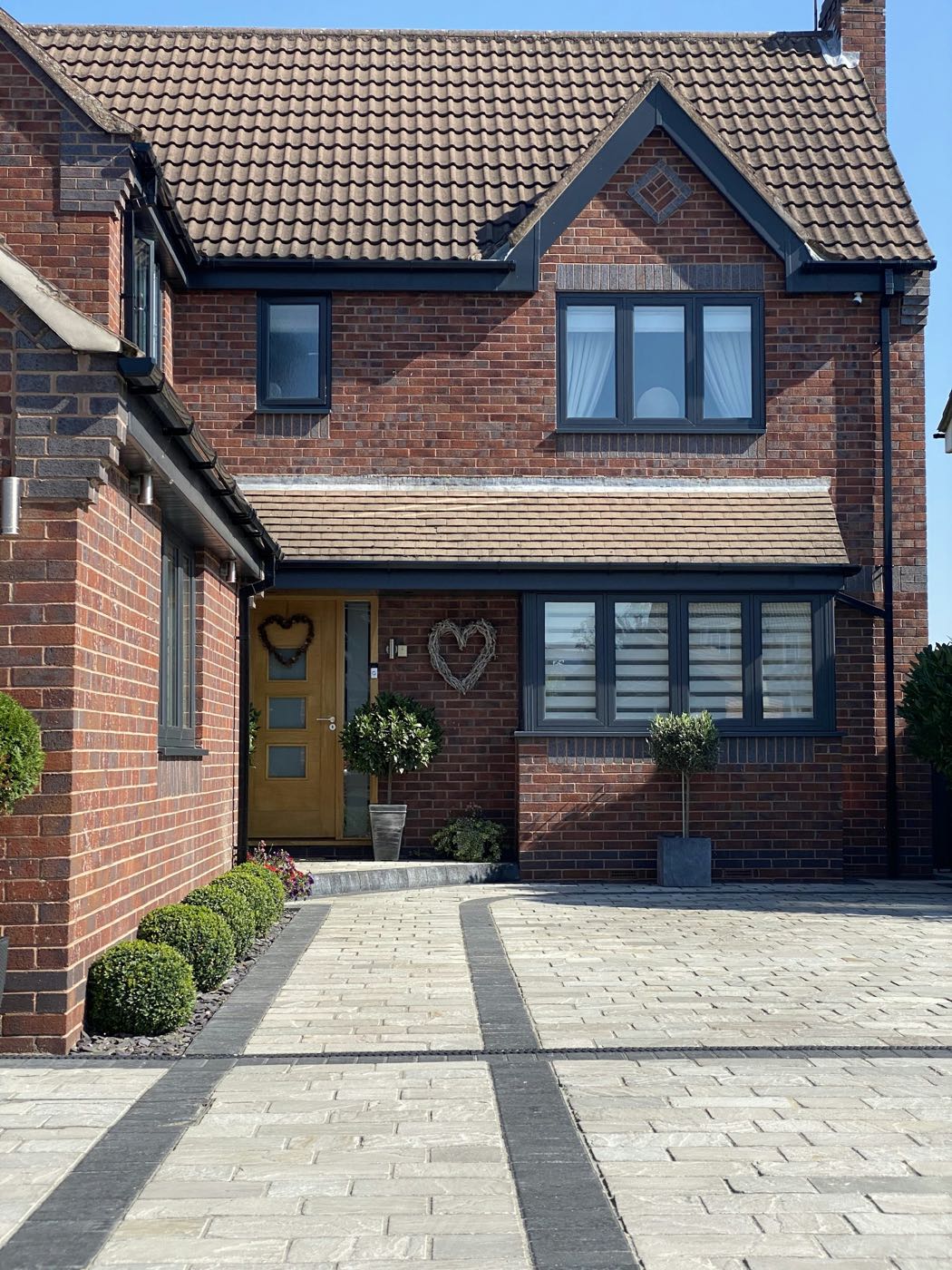
A properly installed resin bound driveway typically lasts about 15 to 25 years, and the Federation of Master Builders (FMB) says it can last over 25 years. Resin bonded, the scattered-stone version, is usually quoted at about 8 to 12 years. In every case, the base under the resin and the quality of the resin decide how long it lasts.
How long each surface lasts
| Surface | Typical lifespan quoted | Upkeep |
|---|---|---|
| Resin bound | About 15 to 25 years (FMB: can exceed 25) | Low |
| Resin bonded | About 8 to 12 years | Medium (loose stones) |
| Tarmac | About 15 to 25 years | Low |
| Block paving | About 20 to 30 years or more | Medium |
| Pattern imprinted concrete | About 20 to 25 years | Low |
| Gravel | About 5 to 15 years | High |
Sources: Less.co.uk resin, tarmac and driveway cost guides (April 2026); FMB (May 2026).
These are estimates, and guides differ. Paving maker Marshalls, for example, says a properly installed block paving drive can last 10 to 15 years “with minimal attention”, which is lower than the trade price guides. Treat any single figure with care.
Cleaning a resin driveway
Resin bound needs very little looking after. A major UK manufacturer says “all you need to do is sweep and occasionally power wash your surface”.
- Sweep regularly, so dirt does not build up in the surface.
- Clear leaves and moss in autumn. Rotting leaves cause staining, according to one April 2026 guide.
- Jet wash occasionally with a wide fan nozzle at moderate pressure, keeping the lance moving.
- Avoid harsh solvents.
Lighter stone blends show oil marks and moss more readily than darker ones, according to a cost specialist quoted by Homebuilding & Renovating. He also warns that the surface can feel slippery when wet in some cases. If oil drips are likely, a darker blend will show them less.
Keeping it permeable
A resin bound drive drains through tiny gaps between the stones, and those can clog. The GOV.UK guidance on permeable driveways gives these do’s and don’ts:
- Do clean up leaves, mud and litter before they clog the surface.
- Don’t put soil or sand on the drive, mix concrete on it, or pour liquids such as oil onto it.
- Don’t let garden beds drain onto it, because soil washes in.
If a permeable surface does clog, GOV.UK says porous asphalt and permeable blocks can be unclogged with a small vacuum sweeper or a jet washer.
Weeds
Resin bound has no joints, so weeds have very little to grow in. The cost specialist in Homebuilding & Renovating says: “Unlike block paving it has no joints for weeds to come through.” The GOV.UK guidance adds that brushing off any dirt that collects helps stop weeds growing.
Block paving is different. Interpave, the trade body for concrete paving makers, says weeds tend to grow where vehicles do not pass, and can be spot-treated with weed killer following the supplier’s instructions. The older GOV.UK guidance prefers pulling them by hand or using a weed burner on permeable surfaces, so check what your installer recommends.
Repairs
Resin is harder to repair than block paving. Homebuilding & Renovating’s expert says “block paving wins on repairability, because you can lift and relay individual blocks, while a resin repair means patching a seamless surface”. Patches in resin usually show.
Signs of trouble are similar on any permeable drive. Interpave says problems usually show on the surface as ponding (a drainage issue) or loose and damaged blocks (a structural issue); without those signs, no action is needed.
What shortens a driveway’s life
- A weak or thin base. Correctly installed resin “needs to be fitted on a solid, correctly laid sub-base by a competent installer”, according to a driveway installer quoted by Homebuilding & Renovating.
- Cracks in the base. One manufacturer warns that although its resin is crack resistant, “it will ultimately reflect any crack within the base”, so old concrete needs proper preparation first.
- Resin that is not UV-stable. Aromatic resin yellows and darkens in sunlight; aliphatic resin keeps its colour. Our resin bound vs resin bonded guide explains the difference.
- Driving on it too soon. Installers quoted by Homebuilding & Renovating suggest keeping cars off for at least 24 to 48 hours, longer in cool weather.
- Clogging. Soil, sand and leaves left on a permeable surface stop it draining.
- Heavy vehicles. The same article says standard resin installations are designed for cars, not regular traffic over 10 tonnes, so keep skips and heavy lorries off it.
Guarantees
Most guarantees on professionally installed resin driveways run 10 to 20 years, according to Homebuilding & Renovating. Some manufacturers back their own approved installers for longer: one large UK manufacturer’s 2025 brochure offers up to 30 years against loose stone, cracking, oil damage, UV degradation, frost damage and workmanship.
When comparing guarantees, ask:
- Who backs it: the installer, the manufacturer, or both?
- What happens if the installer stops trading?
- Does it cover UV discolouration and loose stones, or only cracking?
- Does it depend on the installer laying a specified base?
Choosing an installer
The FMB advises getting detailed quotes and checking that the builder understands the full construction, not just the finish. In practice that means:
- Itemised quotes listing excavation, sub-base depth, drainage, edging and surface.
- The resin named in writing, with confirmation it is UV-stable.
- The base described in writing, including whether it is permeable. That matters for planning, as our planning and dropped kerbs guide explains.
- Trade membership you can check, such as the FMB’s member search, or approval by the resin manufacturer.
- Past jobs you can visit, ideally a few years old, so you can see how they have aged.
If you are still choosing a surface, compare resin vs block paving vs tarmac, and see our driveway cost guide for 2026 prices.
Planning a resin drive? Get a quote from a checked local installer.
Common questions
How long does a resin driveway last?
A resin bound driveway on a good base typically lasts about 15 to 25 years, according to 2026 price guides, and the Federation of Master Builders says it can last over 25 years. Resin bonded is usually quoted at about 8 to 12 years.
Can you jet wash a resin driveway?
Yes, occasionally. Use a wide fan nozzle at moderate pressure, keep the lance moving and avoid harsh solvents. Regular sweeping does most of the work.
Do weeds grow through resin driveways?
Rarely. Resin bound has no joints for weeds to grow through, so weed growth is minimal. GOV.UK guidance says brushing off dirt that collects helps stop weeds growing, so sweep it and clear leaves.
Can a resin driveway be repaired?
Yes, but patch repairs usually show, because you are patching a seamless surface. Block paving is easier to repair, as individual blocks can be lifted and relaid.
What guarantee should I get on a resin driveway?
Most professionally installed resin driveways carry guarantees of 10 to 20 years. Ask who backs it, the installer or the manufacturer, and whether it covers loose stones, cracking, UV discolouration and workmanship.
Related guides
Sources
- Federation of Master Builders, Costs for a new driveway in the UK, 21 May 2026
- Homebuilding & Renovating, Resin driveways: pros and cons, 15 August 2026
- Less.co.uk, Resin driveway cost, updated April 2026
- Less.co.uk, Tarmac driveway cost, updated April 2026
- Less.co.uk, Driveway cost UK, prices updated April 2026
- Marshalls, How much does a new block paving driveway cost?, 14 February 2022
- SureSet, Resin bound paving brochure (M278 v6), 2025
- GOV.UK (DCLG), Guidance on the permeable surfacing of front gardens, May 2009
- Interpave, Concrete block permeable pavements: maintenance guidelines, February 2015
- Red Band UK, Resin bonded surfacing, checked 17 October 2026