
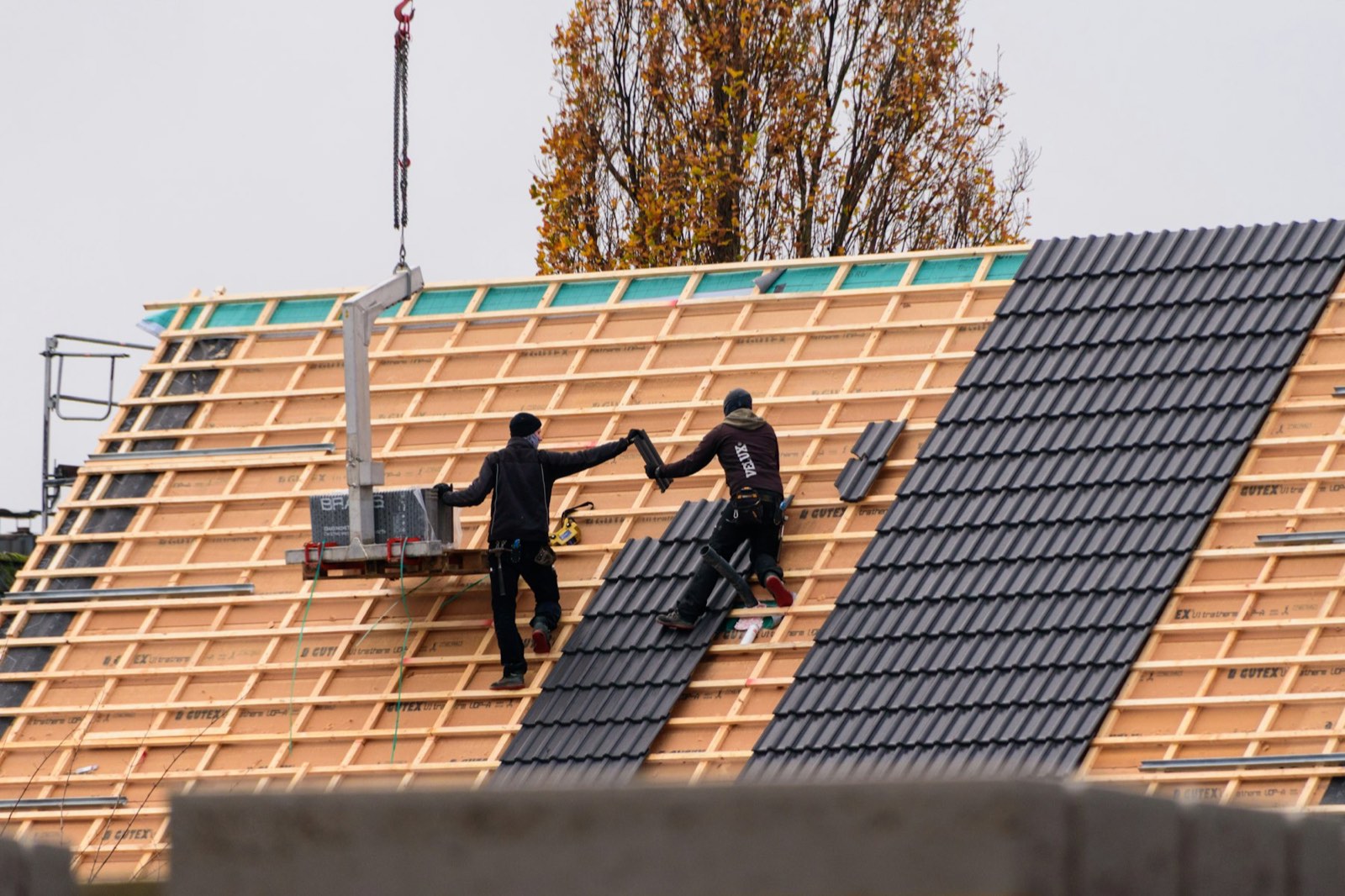
A full re-roof on a typical three bedroom house usually costs somewhere between about £6,000 and £21,000 in 2026, before VAT. Where you land in that range depends mostly on the size of the roof, the covering you choose and how easy the roof is to reach.
The figures below are estimates from published 2026 cost guides. They are a starting point for judging quotes, not a price for your house.
Typical cost by house type
Published guides disagree, because some quote a basic concrete tile job and others include more of the extras. The table shows both ends so you can see the spread.
| House | Concrete tile re-roof (Trade2Base, June 2026) | Strip and retile (FMB, November 2025) |
|---|---|---|
| Terrace (about 60 to 80 m² of roof) | £4,500 to £7,000 | £7,500 to £12,500 (2 bed terrace) |
| Bungalow (about 70 to 100 m²) | £5,000 to £8,000 | Not given |
| 3 bed semi (about 80 to 100 m²) | £6,000 to £10,000 | £10,000 to £15,000 |
| Detached (about 120 to 140 m²) | £8,500 to £14,000 (3 bed) | £15,000 to £20,000 (4 bed) |
The lower column excludes scaffolding, skip hire and structural repairs. The Federation of Master Builders figures come from a firm of chartered surveyors and are described as approximate.
Which? surveyed 11 of its Trusted Traders in November 2025. They put a new tiled roof on an average three bedroom house at about £7,000 to £21,000, excluding VAT, including labour and materials.
Cost by roofing material
The covering is the biggest choice you make. Here are typical supplied and fixed rates per square metre of roof, excluding scaffolding (Trade2Base, June 2026):
| Covering | Typical cost per m² | Notes |
|---|---|---|
| Concrete interlocking tiles | £40 to £70 | Cheapest and quickest to lay |
| Fibre cement (artificial) slate | £55 to £80 | Slate look at lower cost |
| Clay plain tiles | £60 to £90 | Slower to lay, common on older Shropshire houses |
| Natural Welsh slate | £80 to £130 | The guide adds 50% to 80% to the tile part of the job |
Why clay and slate cost more
Labour is roughly 40% of a roof budget, according to the FMB. Interlocking concrete tiles go on at about 10 per square metre, while plain clay tiles need about 60 per square metre, so the roofer spends far longer on each square metre.
The material itself also costs more. The FMB lists natural slate at about £53 per m² and plain clay tiles at about £60 per m², against about £22 per m² for interlocking concrete tiles.
Matching local character
In much of historic Shropshire the “right” material is not your choice alone. Shropshire Council’s appraisal for Bridgnorth says “the dominant roof material of Bridgnorth is locally-manufactured clay tiles”, with some Welsh slate. Ludlow’s conservation area statement says “old clay tiles and Welsh slate are the main roofing materials.”
If your house is listed or in a conservation area, budget for clay or natural slate rather than concrete. Our guide to planning and Building Regulations for a new roof explains when the council has a say.
Scaffolding
Most re-roofs need a full scaffold for safety and access. A 2026 trade guide puts a two to three week hire on a standard semi or detached house at about £600 to £1,200. Bigger houses, three storeys and awkward sites cost more.
If the scaffold has to stand on the pavement, the council charges for a licence. The FMB gives examples of £200 and £383 per 28 days from two English councils; check your own council’s fee.
Ask whether the scaffold is included in the quote. While it is up, it is the cheapest time to deal with fascias, soffits and guttering.
VAT on a new roof
HMRC’s Notice 708 says that if a builder carries out work to an existing building “you will normally have to charge VAT at the standard rate”. So a re-roof on an occupied home is normally charged at 20%.
- Empty homes: the reduced rate of 5% can apply when renovating a dwelling that has not been lived in during the two years before work starts.
- Insulation: insulation for roofs and lofts is zero rated until 31 March 2027 when installed as energy-saving materials. When it is part of a single re-roofing job, HMRC’s rule is that the principal element sets the rate, so ask your roofer how they will invoice.
- Small firms: a roofer whose taxable turnover is under the £90,000 threshold does not have to register for VAT, so may not charge it.
Many guides, including Which?, quote prices without VAT. Check whether each quote you get is plus VAT or VAT inclusive before you compare them.
What else affects the price
- Roof size and pitch. More square metres means more material and labour. Steep roofs are slower to work on.
- Chimneys and lead work. Complete chimney stack flashing is about £300 to £600 per stack, and repointing a chimney about £500 to £1,200 (Trade2Base, June 2026).
- Ridges and hips. Dry fix ridge systems are about £20 to £30 per metre run, against £15 to £25 for mortar bedded (same source).
- Hidden timber repairs. The FMB advises keeping a contingency for defects found after stripping, such as rotten decking, split rafters and damaged fascias.
- Insulation. A re-covered roof usually has to meet current energy standards. Approved Document L gives a target U-value of 0.16 W/m²K, which for a cold loft means about 250mm of mineral wool or equivalent.
- Where you live. One guide adds 20% to 35% for London and the South East; Which? says prices are likely to be at the upper end there. We have not found a published Shropshire only figure.
A worked example
Take a 3 bed semi re-roofed in concrete tiles. Using the 2026 trade guide ranges:
- Roof covering: £6,000 to £10,000
- Scaffolding: £600 to £1,200
- VAT at 20%: about £1,320 to £2,240
- Total: about £7,900 to £13,400
That excludes timber repairs, chimney work and any heritage materials. Treat it as an illustration of how the costs stack up, not a quote.
Before you commit
A new roof is a big spend, and not every tired roof needs one. If the trouble is a few slipped tiles or a leaking flashing, read should you repair or replace your roof first.
Get at least three itemised quotes that split out covering, scaffolding, insulation and VAT. For extensions and dormers, our guide to flat roof options covers the different costs there.
Planning a new roof? Get a quote from a checked local roofer.
Common questions
How much does a new roof cost on a 3 bed semi?
Published 2026 guides put a concrete tile re-roof on a 3 bed semi at about £6,000 to £10,000 before scaffolding, while the Federation of Master Builders quotes about £10,000 to £15,000 for stripping and retiling. Add scaffolding and 20% VAT if your roofer is VAT registered.
Is natural slate more expensive than tiles?
Usually, yes. One 2026 trade guide puts natural Welsh slate at about £80 to £130 per square metre supplied and fixed, against £40 to £70 for concrete interlocking tiles. Natural slate can last over 100 years, according to the Federation of Master Builders.
Do I pay VAT on a new roof?
Yes, normally at 20%. HMRC says work to an existing building is normally standard rated. The main exception is a home that has been empty for at least two years, where 5% can apply. A small roofer below the £90,000 VAT threshold may not charge VAT at all.
Are Shropshire roofing prices cheaper than the national average?
We have not found a published Shropshire only figure. National guides say London and the South East cost more, so a Shropshire quote is more likely to sit in the middle of the national ranges than the top.
Related guides
Sources
- Which?, How much do roofers cost? (Trusted Traders survey, November 2025), 8 May 2026
- Federation of Master Builders, New roof cost UK: complete homeowner guide, 5 November 2025
- Trade2Base, Roofing pricing guide UK, 8 June 2026 (secondary)
- HMRC, Buildings and construction (VAT Notice 708), section 8
- HMRC, VAT on energy-saving materials and heating equipment (VAT Notice 708/6)
- gov.uk, VAT registration: when to register
- Planning Portal, Roof: Building Regulations, work to an existing roof
- MHCLG, Approved Document L Volume 1: Dwellings, 2021 edition incorporating 2023 amendments, Table C1
- Shropshire Council, Bridgnorth Conservation Area Appraisal, 1999
- Shropshire Council, Ludlow Conservation Area statement, 1994