
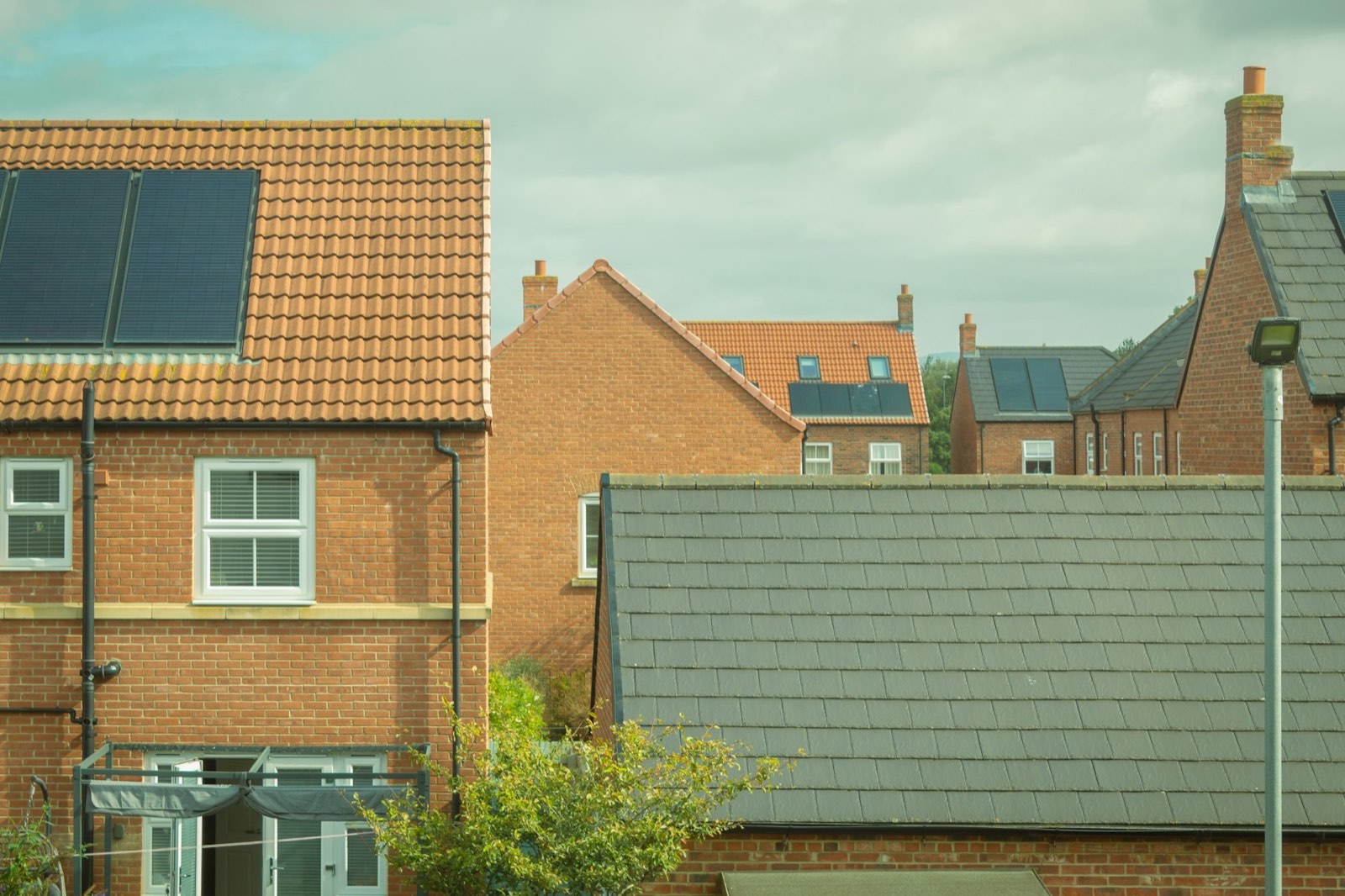
Most homeowners in England do not need planning permission for solar panels on their roof. They are permitted development as long as they sit within set size limits and the house is not listed. Since 27 August 2026 the rules have been rewritten by S.I. 2026/896, and in parts of Shropshire, notably Ironbridge, local rules remove the right altogether.
The national rules for houses
Permitted development for domestic solar sits in Part 14, Class A of the General Permitted Development Order 2015. As amended from 27 August 2026, panels on a house are permitted development unless they break one of these limits:
| Where | Limit |
|---|---|
| Pitched roof | No more than 0.2 metres beyond the roof slope, and not higher than the highest part of the roof (chimneys excluded) |
| Flat roof | No more than 0.6 metres above the highest part of the roof (chimneys excluded) |
| Wall abutting a highway | No more than 0.2 metres from the wall |
| Any other wall | No more than 0.4 metres from the wall |
| Balcony or roof enclosure | 0.2 metres where it abuts a highway, otherwise 0.4 metres |
Panels are never permitted development on a listed house or a building in its grounds, or on a scheduled monument.
Two conditions always apply. Panels must, so far as practicable, be sited to minimise their effect on the look of the building and on the amenity of the area. They must also be removed as soon as reasonably practicable once no longer needed.
What changed on 27 August 2026
S.I. 2026/896 was made on 29 July 2026 and came into force on 27 August 2026. Compared with the version in force on 1 August 2026, the main changes for houses are:
- Wall and balcony panels can project further. The old rule capped all wall panels at 0.2 metres. Now it is 0.4 metres unless the wall or balcony abuts a highway.
- Plug-in solar is included. The order defines plug-in solar as panels “intended for connection” to the home’s wiring “by means of a standard plug and socket”. It cannot be fixed to a wooden wall, balcony or enclosure, or to timber cladding.
- Conservation area wording is wider. The ban on walls fronting a highway now also covers balconies and roof enclosures, defined as “any balustrade, railing, parapet or other enclosure installed on the roof”.
- A grace period. Work that was permitted before 27 August 2026 but is not now can still be carried out until the end of 26 August 2027.
Ground-mounted panels in the garden fall under Class B, which was also amended. Height limits now range from 1 metre to 4 metres depending on distance from the boundary and the house, and panel area is capped at 9 square metres. Some conservation area sites need prior approval first.
Conservation areas
In a conservation area (or a World Heritage Site), the national rule is narrow. Panels are not permitted development on a wall, balcony or roof enclosure which fronts a highway.
A pitched roof slope, even one facing the street, is not excluded by that wording. But councils can go further with an Article 4 Direction, and the siting condition still asks you to minimise the visual effect. Shropshire Council looks after 128 conservation areas, and Telford & Wrekin has 8.
Listed buildings
If your house is listed, solar panels are not permitted development anywhere on it or on buildings in its grounds. You also need listed building consent.
That matters in Shropshire’s historic towns. Historic England’s list holds about 784 entries in Shrewsbury parish and about 425 in Ludlow parish, and one entry can cover a whole terrace. If you think your home may be listed, speak to the council’s conservation officer before paying for a design.
Article 4 areas in Shropshire and Telford
An Article 4 Direction removes some permitted development rights in a defined area, so work that would normally be allowed needs permission.
Ironbridge Gorge
Telford & Wrekin Council’s Article 4 Direction for houses in the Ironbridge Gorge World Heritage Site dates from 1998. The amended direction, confirmed on 28 December 2012, withdraws the right to install “solar panels and micro generation facilities on or attached to a dwelling”. If you live in Ironbridge, Coalbrookdale or elsewhere in the World Heritage Site, assume you need planning permission for any panels and ask the council.
Shropshire Council areas
Shropshire Council’s Article 4 map, queried on 17 October 2026, names directions in parts of Shrewsbury (including Belle Vue, Castlefields, Mountfields, The Mount and around St Julian’s Friars), Bridgnorth, Bridgnorth Innage Gardens, Llanymynech, Prees and Highley (Clee View). The council says roof alterations are among the works Article 4 commonly controls.
The map shows where directions apply, not exactly what each one covers. If your street is inside one, check with the council before you order panels. No Article 4 areas were shown for Ludlow or Oswestry, though conservation area and listed building rules still apply there.
Use the council’s conservation area and Article 4 checker with your postcode.
Building regulations and roof strength
Planning and building regulations are separate. Even when no planning application is needed, the Planning Portal says building regulations will normally apply to roof panels:
- Structure. The roof’s ability to carry the weight of the panels must be checked and proven, and some roofs need strengthening.
- Electrics. The electrical installation is covered too.
The Planning Portal recommends using an installer who belongs to a competent person scheme. If the roof covering is near the end of its life, replace it first; see our roofing page and new roof planning and building regulations.
A quick checklist
- Is the house listed? If yes, you need consent.
- Is it in Ironbridge Gorge or another Article 4 area? Check the council map.
- In a conservation area, will any panel go on a wall, balcony or roof enclosure facing a road?
- Will roof panels stay within 0.2 metres of the slope and below the ridge?
- Has the installer confirmed the roof can take the load?
Then compare prices in our solar panel cost guide.
Ready to go ahead? Get a quote from a checked local installer.
Common questions
Do I need planning permission for solar panels in a conservation area?
Usually not for panels on a pitched roof. The national rules only exclude panels on a wall, balcony or roof enclosure that fronts a highway. Some conservation areas also have an Article 4 Direction, so check the council map first.
Can I put solar panels on a listed building?
Not under permitted development. Panels on a listed house, or on a building in its grounds, need the council's approval, including listed building consent. Talk to the council's conservation officer before paying for a design.
Do solar panels need building regulations approval?
Building regulations normally apply to roof panels. The Planning Portal says the roof's ability to carry the weight must be checked and proven, and the electrical work is covered too. It recommends an installer who belongs to a competent person scheme.
What changed on 27 August 2026?
S.I. 2026/896 rewrote the domestic solar rules. Wall and balcony panels on houses can project 0.4 metres where they do not abut a highway, plug-in solar is now included, and new conservation area wording covers balconies and roof enclosures. Work permitted under the old rules can still go ahead until 26 August 2027.
Related guides
Sources
- legislation.gov.uk, GPDO 2015 Schedule 2 Part 14 Class A, as amended, checked 17 October 2026
- legislation.gov.uk, Class A as it stood on 1 August 2026
- legislation.gov.uk, The Town and Country Planning (General Permitted Development) (England) (Amendment) Order 2026, S.I. 2026/896
- Telford & Wrekin Council, Article 4 Direction, updated 24 November 2025
- Telford & Wrekin Council, Conservation areas
- Shropshire Council, Conservation areas and Article 4 guidance
- Shropshire Council, Article 4 Direction GIS layer, queried 17 October 2026
- Shropshire Council, Conservation area and Article 4 checker map
- Historic England, National Heritage List for England (listed building points)
- Planning Portal, Solar panels: building regulations